How Much Do You Need to Retire in India?
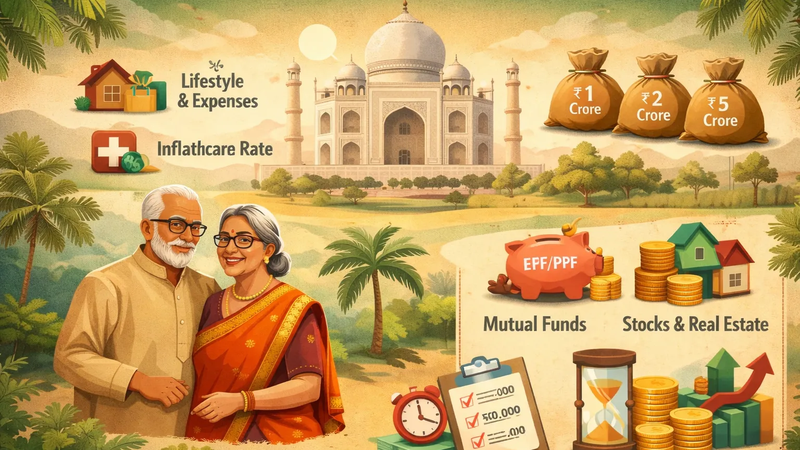
In India, retirement usually means stopping full-time work at a fixed age, most commonly between 58 and 60. It marks a shift from earning a monthly salary to living on savings, pensions, or investments. For many people, this is the phase where the big question comes up. How much money is required to retire in India?
Earlier, retirement often depended on family support. Joint families were common. Today, nuclear families are the norm. This has changed how people think about retirement. Most Indians now need to be financially independent after retirement.
Retirement also brings a financial shift. Income comes from sources like EPF, PPF, NPS, pensions, and personal investments. Managing these well decides how comfortable life will be later.
Culturally, retirement once meant slowing down. Now, it is about maintaining lifestyle, freedom, and dignity.
Calculator your Retirement Amount Now
Key Factors That Decide How Much Money You Need to Retire in India
There is no single number that works for everyone. Still, a common rule says you need a retirement corpus equal to 15-30 times your annual expenses. This number changes based on inflation, healthcare needs, lifestyle, and how long you are likely to live. These factors together decide how much money is required to retire in India.
Below are the key factors that influence how much money you need to retire in India.
Current and Post-Retirement Expenses
Start with your monthly expenses. After retirement, most people need around 70-90% of their pre-retirement income to maintain the same lifestyle.
Inflation and Cost of Living
Inflation slowly reduces the value of money. In India, an average inflation rate of 6-7% can double your expenses in about 10-12 years. Ignoring inflation can lead to a serious shortfall when planning how much money to retire in India.
Life Expectancy
People are living longer. Many retirees need their savings to last 25-30 years after retirement. A longer life means a larger corpus is needed to ensure your money does not run out.
Healthcare Costs
Medical expenses increase with age. Hospitalisation, medicines, and long-term care can be expensive. Many planners suggest maintaining a separate medical buffer or insurance cover of ₹1–2 crore for life.
Investment Returns and Asset Allocation
Your investment returns play a key role. Equity, mutual funds, and fixed-income options grow at different rates. What matters is the return after inflation. Higher real returns reduce the amount of money required to retire in India.
Existing Assets and Debt
A debt-free home lowers your monthly expenses after retirement. On the other hand, loans or EMIs reduce your ability to save and increase the retirement corpus needed.
Lifestyle and Personal Goals
Travel plans, hobbies, and family responsibilities, such as children’s education or weddings, add to retirement costs. These lifestyle choices directly affect how much money is needed to retire in India.
Other Sources of Income
Pensions, rental income, or annuities can provide regular cash flow. These income sources reduce the lump sum required and make retirement planning easier.
How Much Money Do You Need to Retire in India?
In general, a comfortable retirement in Tier-2 cities may need around ₹3 to ₹5 crore. In metro cities like Mumbai or Delhi, the number can range from ₹6 crore to ₹10 crore. These estimates assume a retirement period of 20 to 25 years.
A commonly used method is to target a corpus equal to 15-30 times your annual expenses. This figure must be adjusted for inflation, typically assumed to be around 6% per year.
Monthly Income Needs
Your current monthly expenses set the base. If you spend ₹50,000 per month today, you may need a retirement corpus of ₹1.5 crore or more. For a higher lifestyle with monthly expenses of ₹1 lakh or more, the required corpus can exceed ₹3 crore.
Impact of Inflation
Inflation has a major effect on retirement planning. At 6% inflation, expenses double roughly every 12 years. A monthly budget of ₹30,000 today can become close to ₹1 lakh in about 20 years. This is why inflation must be built into how much money to retire in India.
Location Matters
Where you retire plays a big role. Living in a Tier-2 city usually costs much less than living in a metro. Lower housing, transport, and daily costs can significantly reduce how much money needed to retire.
Early Retirement
Retiring before 60 increases the pressure on your savings. If you retire at 40 or 50, your corpus must last much longer. This means you need to save more and invest smarter to support a longer retirement period.
Start Early
Time is your biggest advantage. Starting retirement planning at 30 instead of 40 can help you build a corpus that is nearly 60% larger. This reduces stress later and makes the goal more achievable.
Invest for Growth
Your investments must grow faster than inflation. Dependence on fixed deposits alone may not be enough. A growth-oriented investment approach helps control how much money is required to retire in India.
Follow a Safe Withdrawal Rule
A withdrawal rate of 3-4% per year is considered safer for long-term sustainability. This approach helps your retirement corpus last through different market cycles.
Retirement Corpus Needed Based on Indian Lifestyle Types in India
There is no fixed retirement age in India. The amount depends mainly on your lifestyle and the city you choose to retire in. On average, a comfortable retirement in India may require a corpus between ₹3 and ₹8 crore. This assumes a 6% inflation rate, rising healthcare costs, and a retirement period of 20 to 30 years.
A common approach is to use a multiple of your annual expenses. Many planners suggest a 30x rule of thumb for a safer estimate. Urban lifestyles usually push this number higher.
Comfortable Lifestyle in a Tier 1 City
If you plan to retire in a Tier 1 city, expenses are higher due to housing, healthcare, and daily costs. For someone currently around 35 years old and planning a long retirement, a corpus of ₹4.5 to ₹5 crore is often needed.
Moderate Lifestyle in Tier 2 or Tier 3 Cities
Smaller cities have a lower cost of living. Daily expenses, rent, and transport are usually more affordable. For a similar quality of life, the required corpus can drop to around ₹1.5 to ₹3 crore.
Luxury Lifestyle
A luxury retirement includes frequent travel, premium healthcare, and high discretionary spending. This type of lifestyle requires a much larger, often customised, retirement plan. In most cases, the corpus required exceeds ₹8 crore.
Simple Guidelines to Estimate Your Retirement Corpus
One basic method is the 15x rule. This means saving at least 15 times your last drawn annual salary. A more conservative approach is the 30x rule. Here, you multiply your expected annual expenses by 30 to arrive at a safer target.
Common Retirement Planning Mistakes Indians Make
Even people who earn well often make basic mistakes while planning retirement. These errors slowly increase the amount of money required to retire in India. Most of them are avoidable if identified early.
Mistake 1: Starting Too Late and Missing Compounding
The most common mistake is delaying retirement planning. Many people believe they have enough time and start saving seriously only in their 40s.
To avoid this, start financial planning as soon as you get married and take small steps to reach milestones. Here’s our guide to financial planning for new parents.
Compounding needs time to work. The biggest growth usually happens in the last 5 to 10 years of investing. If you miss the early years, your retirement corpus depends more on fresh savings than growth.
Someone who starts at 40 may need to save nearly three times as much each month as someone who started at 30. Starting at 45 can mean saving 40-50% of income to reach the same goal.
Mistake 2: Underestimating Inflation and Healthcare Costs
Many people calculate their retirement needs based on today’s expenses. They forget that retirement can last 25-30 years.
In India, a safe inflation assumption is 6-7%. At 7% inflation, an expense of ₹50,000 today can become nearly ₹2 lakh in 20 years. This directly affects how much money is required to retire in India.
Healthcare costs are even more risky. Medical inflation is usually higher than general inflation. While daily expenses may reduce after retirement, medical bills often rise sharply. One major illness can wipe out years of savings.
The solution is simple. Always project expenses using a minimum 6% inflation rate. Also, secure strong health insurance early, including a super top-up cover.
Mistake 3: Being Too Conservative and Avoiding Growth Assets
Fixed-income options usually give 5-6% returns. When inflation is higher, your money loses real value. This means your corpus keeps shrinking in purchasing power. PPF and EPF are important. But putting all money into debt instruments during the earning phase limits growth. Equity is needed to beat inflation.
A balanced approach works better. People below 45 can keep 60-75% in equity through mutual funds or NPS. Even after retirement, a small equity allocation of 10-15% helps the corpus last longer.
Mistake 4: Carrying Debt and Ignoring Estate Planning
Entering retirement with debt is a serious mistake. EMIs do not stop after retirement, but your salary does. High-interest loans, such as credit cards or personal loans, can quickly eat into fixed retirement income.
Clearing all major debt before retirement should be a priority. This reduces stress and lowers how much money needed to retire.
Estate planning is often ignored. Many people think nominees automatically become owners of assets. This is not always true. Without a valid Will, asset distribution is governed by legal rules, which can cause delays or disputes.
The fix is straightforward. Update nominees regularly. Create a simple Will with legal help. This ensures clarity and peace of mind for your family.
How to Build Your Retirement Corpus in India
Building a retirement corpus works best when done in clear steps. This approach also helps you understand how much money is required to retire in India.
Step 1: Define Your Retirement Income Needs
Start by estimating how much monthly income you will need after retirement. Most people require around 70-90% of their current expenses to maintain the same lifestyle.
Step 2: Account for Inflation
Inflation reduces the value of money over time. Your retirement expenses will be much higher than today’s expenses due to rising costs. The impact of inflation on everyday investments is real.
Step 3: Identify Your Retirement Assets
List all sources of retirement savings, such as EPF, gratuity, pension benefits, and personal investments. Knowing what you already have helps identify the gap in the amount of money required to retire in India.
Step 4: Choose the Right Investment Mix
During your working years, focus on growth-oriented investments. Equity-based options help beat inflation over the long term. As retirement nears, gradually shift to safer instruments.
Step 5: Start Early and Stay Consistent
Starting early allows compounding to work in your favour. Even small monthly investments can grow into a large corpus over time.
Step 6: Plan for Healthcare and Emergencies
Medical costs increase with age. Adequate health insurance and an emergency fund protect your retirement savings from sudden expenses.
How FinAToZ Helps You Plan Retirement Smarter
Planning for retirement is easier with the right guidance. FinAToZ helps you make clear, practical decisions about how much money you need to retire in India.
Personalised Planning With a Certified Adviser
You work with a certified financial planner in a one-on-one meeting. Your adviser reviews your current income, expenses, assets, and goals. The focus is to quantify your financial needs.
Investments Aligned to Your Risk Profile
FinAToZ has a qualified investment team supported by research. They select suitable financial products based on your risk profile, time horizon, and goals. Investments are adjusted as market conditions and timelines change.
Regular Reviews to Stay on Track
Your adviser conducts periodic reviews to update your plan. Changes like career shifts or family additions are factored in. Investment performance is reviewed, and corrective steps are suggested to keep your retirement plan aligned with how much money needed to retire.
FinAToZ is a SEBI-registered investment advisory firm. Its secure online platform allows you to track your financial journey and stay connected with your adviser at any time.
Frequently Asked Questions
How much money is required to retire in India?
The amount depends on your lifestyle, the city you live in, inflation, and your retirement age. Many people need a corpus between 25 and 30 times their annual expenses.
When should I start planning for retirement?
The earlier you start, the better. Starting in your 20s or 30s reduces the amount of money you need to retire, thanks to compounding.
Is EPF and pension enough for retirement in India?
In most cases, no. EPF and pension help, but additional investments are usually required to keep up with rising expenses and inflation.
Can I retire early in India?
Yes, but early retirement requires a larger corpus since your savings must last longer.
Get Expert Financial Advice
Book an introductory call with our Certified Financial Planner to explore how we can help you achieve your financial goals.
Book Your Appointment

